See for more themes.
 |
Q6: Amish Style Gardening. Now we investigate growing corn
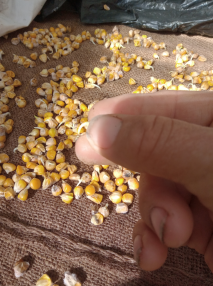
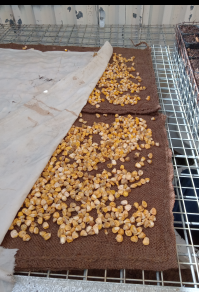
The seeds were soaked in brew mix (*) on Sunday 16 August. (*) Brew mix: I water the pots with molasses, wheat flour and milk powder. Such a brew feeds the soil which feeds the root. I soaked them for one day. Than spread them out over potato bag, with bed sheet over them and a plastic cover / plastic sheet, in the seedling shed, under sunlight. From seed to seed radicle root took 3 days.
What the seeds looked like after day 3.
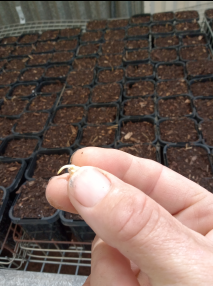
By day 4 some seed roots are too long. Handle with care, and try not to damage the root tip. My finger shows a radicle root a bit too long already. I planted 500 corn seed roots in their pots by end of day 4. The seedling shed also get automatic sprinkling as well. On day 6, I see 54 seedlings with emerging green shoots. --------- Listened to a facebook video of an elderly lady "wheat field hill organics" and heard something special. Organic N comes with water molecules and 3D structure. Plants exude food to microbes to get the N Synthetic N does not do this, actually makes things worse. The process of getting N into the soil is a complex one? The same reason I do not eat mineral sodium salt. I eat organic sodium salt instead. Mineral sodium salt causes problems in the blood but organic sodium does not. Grow celery, feed it with little amounts of mineral sea salt, and eat the celery salt inside as organic minerals. So back to my question, how do you get a soil to be rich? Manure is the waste product of organic minerals that are broken, and discarded. The microbes rebuild these into proper 3D structures in their bodies and pass proper 3D minerals organically across the roots of plants in exchange for food. So some mineral N in little doses might help the microbes build, but only if you feed them with food. It is a complex process, feed the microbes, add little minerals (sythetic + broken minerals in manures) and allow the process of rebuilding in organic minerals. Building organic sodium is hardest because it is leached from microbes easily - and mineral sodium spoils life in your soil. Getting back to Edenic soil will be difficult. Shalom ---------
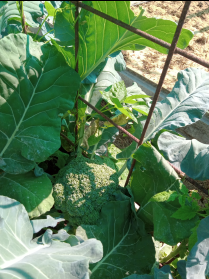
Broccoli nearly ready
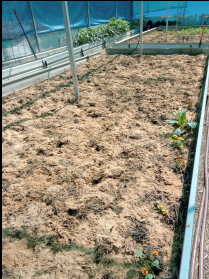
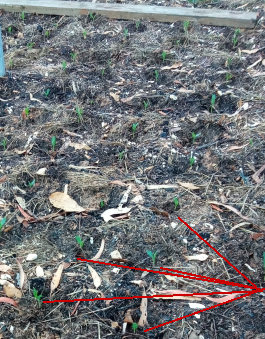
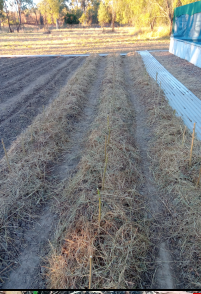
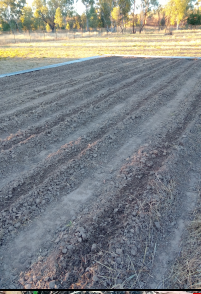
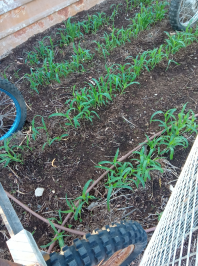
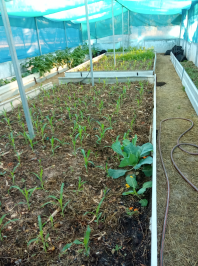
Corn beds with rice, milk powder, wood ash and sand and some chemical fertilizer ready for seedlings.
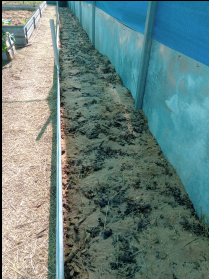
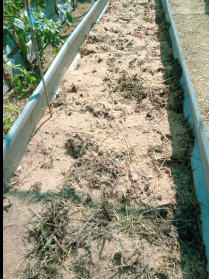
Old potato soil stirred into straw and sown with mung beans and sand and some fertilizer
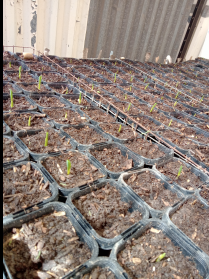
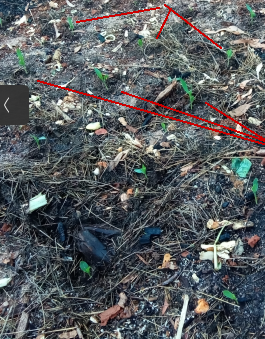
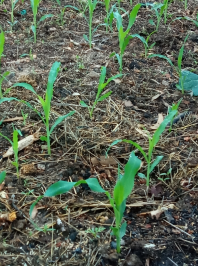
The seedlings of corn coming along (day 7 ) By day 8 the seedlings are emerging fast. I think due to watering with molasses, also in a shed that is humid, and wet.
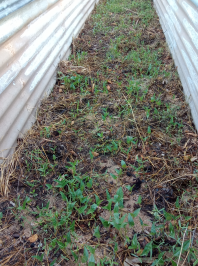
Old metal spud box with sand, straw and mung beans
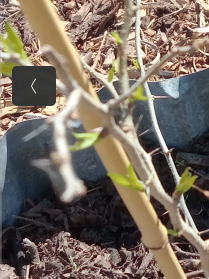
The osage orange with leaves coming on. Praise the Lord !
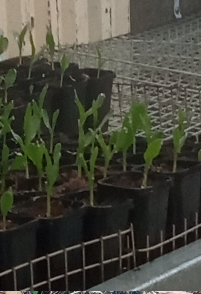
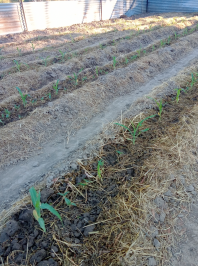
Planted out the corn seedlings (they are 10 days old)
Also in other bed
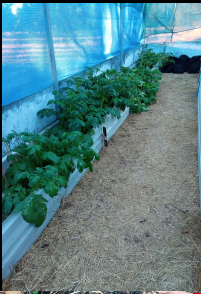
Exotic potatoes coming along
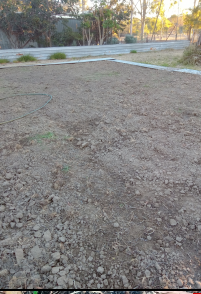
Tapioc cuttings in the new garden soil
Mung beans giving the new soil a boost I have planted corn into these beds too Around 150 seedlings - lost 9 so far to birds or rats - not sure which - need to complete the shed with wire netting and shadecloth.
The rest of the area for pumpkins? Actually the area has lucerne coming along slowly.
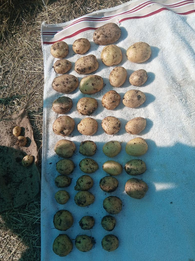
The corn seedlings left in seedling shed - 10 days old, roots already coming out the bottom of tube, and about 70 mm high already ! Not bad for 10 days. I have about 140 seedlings left over, and so I am going to plant them in the earth garden soil, with fertilizer in the hole and the seedling placed on top. Will compare this plot of corn with my organic soil plot. Outside in soil, the seedlings are prone to bird attack, rat attack and potaroo attack. So the area needs protection. Unlike my organic soil plot, in a rat proof shed with shadecloth roof, insect resistant and bird resistant. I harvest 10 plants of Sebago Potatoes.
I got 50 spuds averaging 5 per plant Around 2 to 3 kgs, a modest yield. About 30 really big, the rest the size of a chook egg. The soil still had hard clumps, I broke up more in my hands Lots of worms in it, a good sign Lots of slatters, a great sign But the soil needs to be made richer So I mixed in sand, compost and straw, and rotten chopped greens, and will sow the soil with mung beans - try to get the soil richer. much later - 3 weeks since corn started
As a control, I am comparing corn grown in soil, no dig, no fertilizer and not often waterings. They are 6 inch high, doing better than soil corn, with fertilizer and watered once per day. The soil lacks worms, but I suspect the fertilizer about 1 inch below roots in the soil plot set them back a little? Also soil plot is virgin rotary tilled soil, hard as anything ! The control plot was once cow manure 4 inches thick, soft crumbly soil aged manure, with hard soil underneath.
Here is the corn in the soil plot. Doing OK in 2nd place. Such soil has no worms, and is dead microbally.
A close up of the organic soil plot. Watered once a day, feed with molasses, milk podwer and rice as well as bread flour, and once with chook manure. The soil is mostly straw in decaying array, with sand, some soil, mulch and wood ash spread over. When dug a little, it has worms in it. Such a plot is smelly a little, and looks weird.
A view of both organic plots. Corn is about 8 inches high, 3 weeks old.
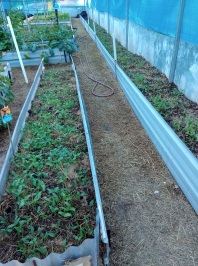
The older soil from potatoes is sown to straw and mung beans.
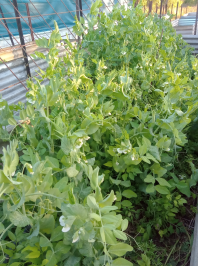
The metal boxes has lots of snow peas bearing pods Not bad for being attacked by birds And growing in straw, some wood ask, sand and some soil. But mostly straw was once 4 feet thick and shrunk to 1 foot.
Other metal boxes sown to mung beans. Also straw once 4 feet thick has shrunk to 1 foot thick. It is slowly breaking down - needs some manure on it? Sep 8 2026
|
Created by Rob Thompson. Hosted since 10/01/2012. Visitors HOSTED by Prologic, my Son. A thin website.