See for more themes.
 |
Q2: Amish Style Gardening. Updates on growing so far from May - six weeks towards winter time in Queensland Australia - an arid subtropical region near Emerald
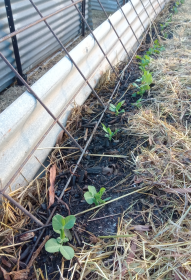
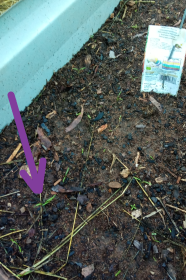
The snow peas growing in straw. Growing slowly - to be expected. Due to bacteria and fungi on the straw robbing N as it breaks the C down into composted soil. Need more N to help snow peas grow and help straw decay. Sadly birds are eating the shoots. Bother :(
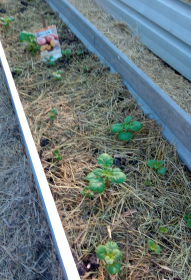
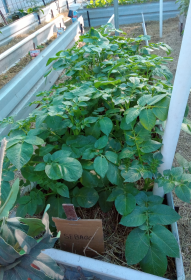
Rodeo potatoes coming up !! wow... Red lady in the background.
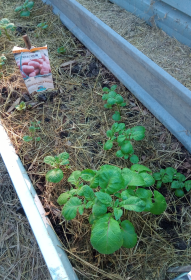
Imperial blue potatoes coming !! nice...
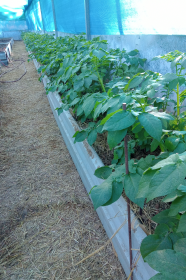
Sebago spuds growing thickly
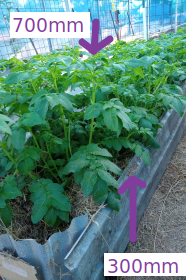
King Edwards nearly 700mm high
Other Kings growing in "grow bags"
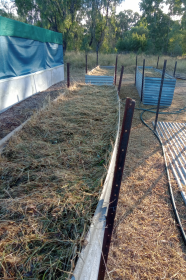
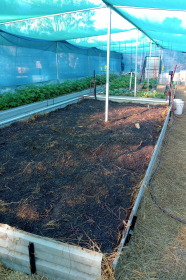
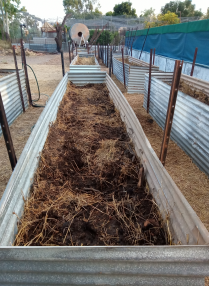
The straw beds ready for next Feb. Potato beds, giving time to break down from straw to compost soil. These beds are topped with sand Why? Because compost breaks down into hard material, the sand prevents the material becoming hard. I also add wood ash for conditioning I also add bio char (charcoal) to make the soil richer. A bush fire along our road supplied heaps of grass charcoal and twigs of charcoal perfect for the garden - I took wheelbarow loads of it.
View in veggie shed with beds of straw becoming compost soil. Plan to feed the new soil with a brew of feed the soil
Soil feeding brew Mix into 6 20 litre buckets, making 120 litres of solution. Water the brew over your garden, and top with mulch. Earthworms gather in days a sign your garden soil is healthy. Feed the microbes - not with fertilizer - but with food. And the microbes fertilize your plants. No need for expensive fertilizer. I make egg brews, chicken manure teas, rotted kitchen scraps, and anything of food I can find, mix and make up a brew with molasses and feed the microbes in the soil. Keep adding straw and sand and bio char (charcoal) with wood ash and watch things grow mad. The sand keeps the organic matter soft. The charcoal gives the microbes a home to live in. The straw gives food to the microbes with molasses sugars. I also bury copper tubes into the ground edge every 200 mm apart. With Zinc nails or Zinc plated pipes on the other side edge. Between the two metals a faint electrical field is built up and causes the insects to leave your garden alone !!
CARROTS coming in special sandy soil
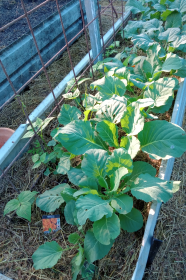
Broccoli growing in winter This is kindergarden stuff so far The straw is not compost yet So the real soil is not used in this style. The plants pull the minerals from soil, making organic matter and this material is broken down into compost which becomes the soil for the veggies. This means in time the veggies live and grow in community based compost, not real soil. Will be interested in how this goes in time? Feeding the microbes is making the plants grow fantastic !
On U Tube Videos, an agronomist noticed a sapling growing out of the ground after fixing a flat tyre. He embarked on a program to stop people destroying trees and allowing them to grow back. He changed millions of acres of desert into productive land. https://youtu.be/unRvlSe2lDY https://youtu.be/yAx9NtwPlyg The zaï technique (called tassa in Hausa) represents centuries of indigenous innovation in the Sahel region of West Africa, particularly Burkina Faso, Niger, and Mali. https://youtu.be/WwcKQXH-umo Botonists filed it among the acacas as acacia albida, but it was eventually judged distinct enough to deserve a genus. all its own. Furtheria, named after a 19th century French colonial governor of Sagal. It is the only species in that genus, a one-of-a-kind tree in its name as much as in its habits
Now I bring "application" to those like me growing vegetable gardens in a desert land in sub tropic Queensland. I call the technique copricing management. You harvest the organic matter once per year, and than all the roots to grow the vegetation back. Leave the ground alone, do not allow animals to over graze it. What you do with the organic matter is place it into metal bozes to break down using cold compost methods into Soil, for growing crops. Simple. Thanks to the U Tube Videos for application insight.
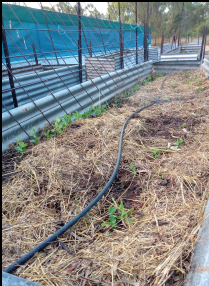
Micro sprinklers water beds of organic matter straw collected from the acres of bush grassland. Notice snow peas trying to grow in the decaying straw/ cold compost methods of decaying organic matter / making a community for microbes to live and release nutrients to the roots of crops. You feed the microbes in the straw/compost/soil not the roots with minerals. You need to add biochar or sand or pumice, to stop old compost becoming too hard as it turns into soil. You want light rich fluffy compoest soil.
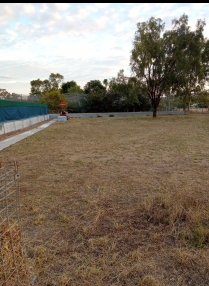
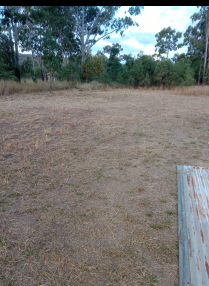
What the harvested land of organic matter looks like. You harvest the land ONCE only per year. Do not allow animals to over graze it. You don't want your land becoming a useless desert !! So I harvest the land once per year and allow the plants to recover on little to no rainfall.
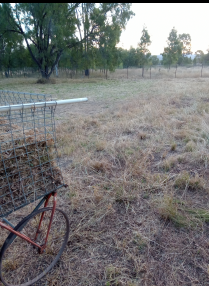
A shot showing the chinese cart that holds the cut straw for the garden. The picture shows the dry land.
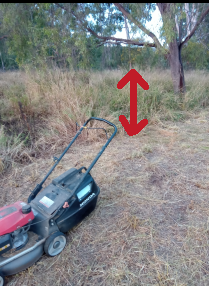
The lawnmower catcher with original un-cut grassland (see red arrows) near by, about 3 feet high. First the land is cut down with a slasher, raked by hand. Than cut lower, again by a lawn mower catcher. After that you allow the roots to grow back the organic matter for next year. You do NOT allow animals to overgraze and stress the roots growing back the tops you removed. The is how you care for the land in a desert region on not much rain.
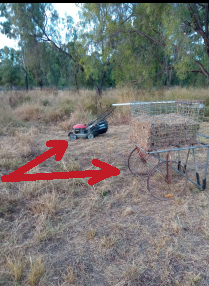
The lawnmover and the chinese cart among the vegetation harvest (red arrows).
How the land looks once harvested ONCE per year. You cannot harvest more than once, otherwise the grasses will become extinct. Lack or rain, too many cuts. Too hot. Not enough root growth to put the top vegetation back. Having goats or cattle left to graze and graze and graze will turn your desert land into a permanent desert. You have to harvest ONCE and allow the vegetation to grow back. Notice the mulch left behind to protect the soil from the hot sun. In other paddocks we have geese that eat all the good plants turning their paddock into a useless dry paddock of desert plants. Nothing good is left. This is a constant reminder of what happens when you let animals forage the land - they make the best plants vanish for good. Only woody weeds are left. Another problem with chooks is they need food and water and this attracts rats.
Where the vegetation matter goes - into metal boxes. The boxes hold the material and using cold compost methods turn into rich light fluffy soil ready for potatoes next year. I also add sand, charcoal and wood ash.
|
Created by Rob Thompson. Hosted since 10/01/2012. Visitors HOSTED by Prologic, my Son. A thin website.